Beamish, hair and history: what do current hair trends tell us about society in 2025?
Getting a 1950s hairdo at Beamish Museum reminded me that hair can tell us much about the era it’s thriving in – so what does modern hair reveal?
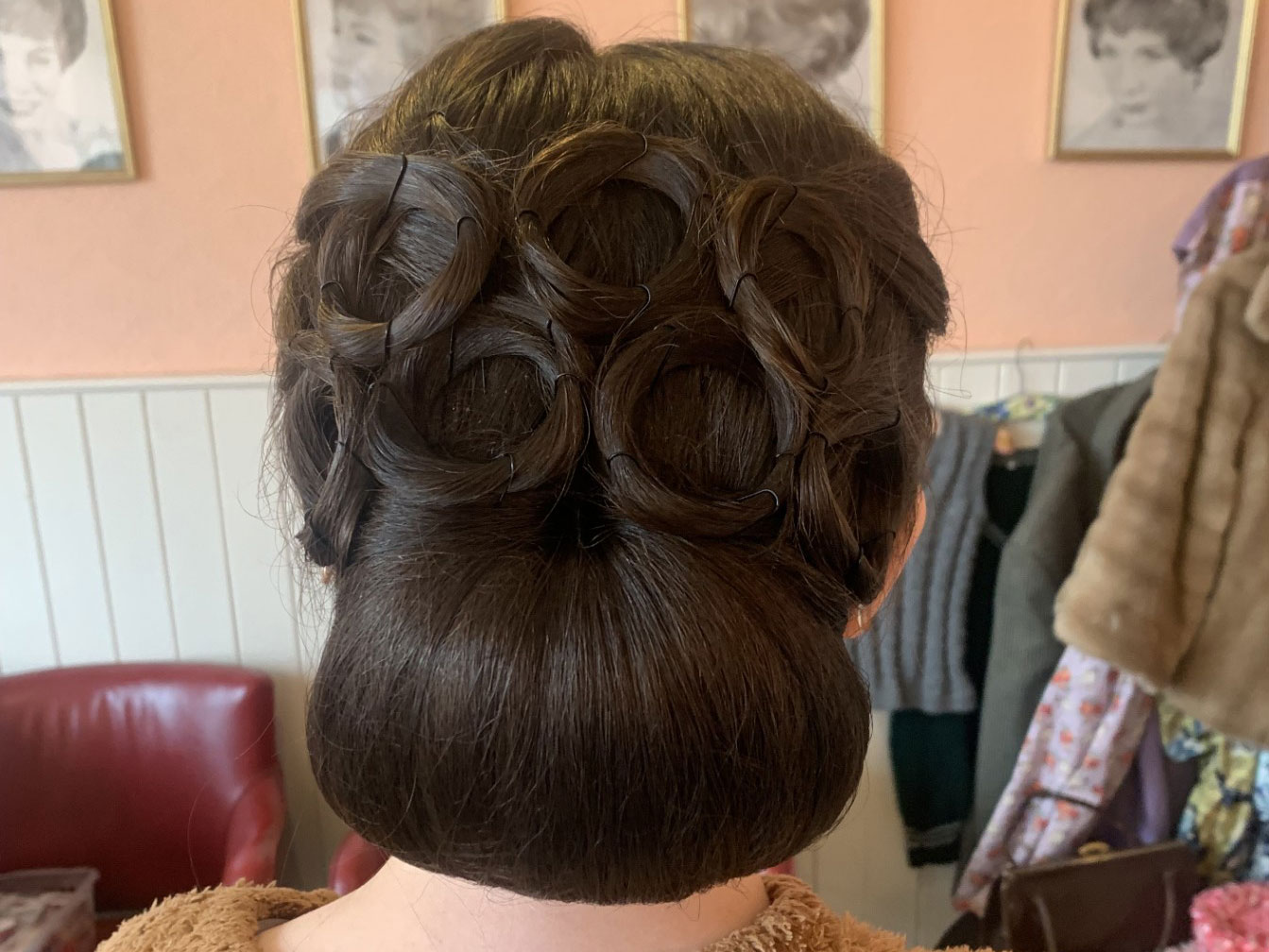
As she sculpts my hair into pin curls and a chignon bun, Zoe tells me that Beamish – the renowned open air museum here in the North East – is nostalgic for many visitors.
With chequered floors and playful light pink walls, Elizabeth’s Hairdressers forms part of the 50s section of the museum, where Zoe – who undertook a course to deliver the 50s hairstyles Beamish offers – makes my hair fantastically retro. Elizabeth’s is a recreation of a hairdresser’s once in Middlesbrough, which was owned by Betty and Ian Macpherson. They’d purchased the place in 1973, and, collaborating with Beamish, their 50s experiences helped define this powerful attraction.
Hair, much like fashion, can often be associated with history, and specific eras in time. Consider the plucked hairline of the Elizabethans, the flowing hair of the 70s and the iconic bob of the 1920s. At Elizabeth’s, visitors can book an appointment for one of three 50s-inspired looks: the chignon with pin curls, a classic French pleat or a bow bun.
Zoe tells me hairdressers in the 1950s were a “social space” and “safe space for women”, as one of the few places where husbands didn’t come. It surprises me – although I find 50s hair pleasing to the eye, I’d never associated it with freedom, a marker of momentary restfulness.
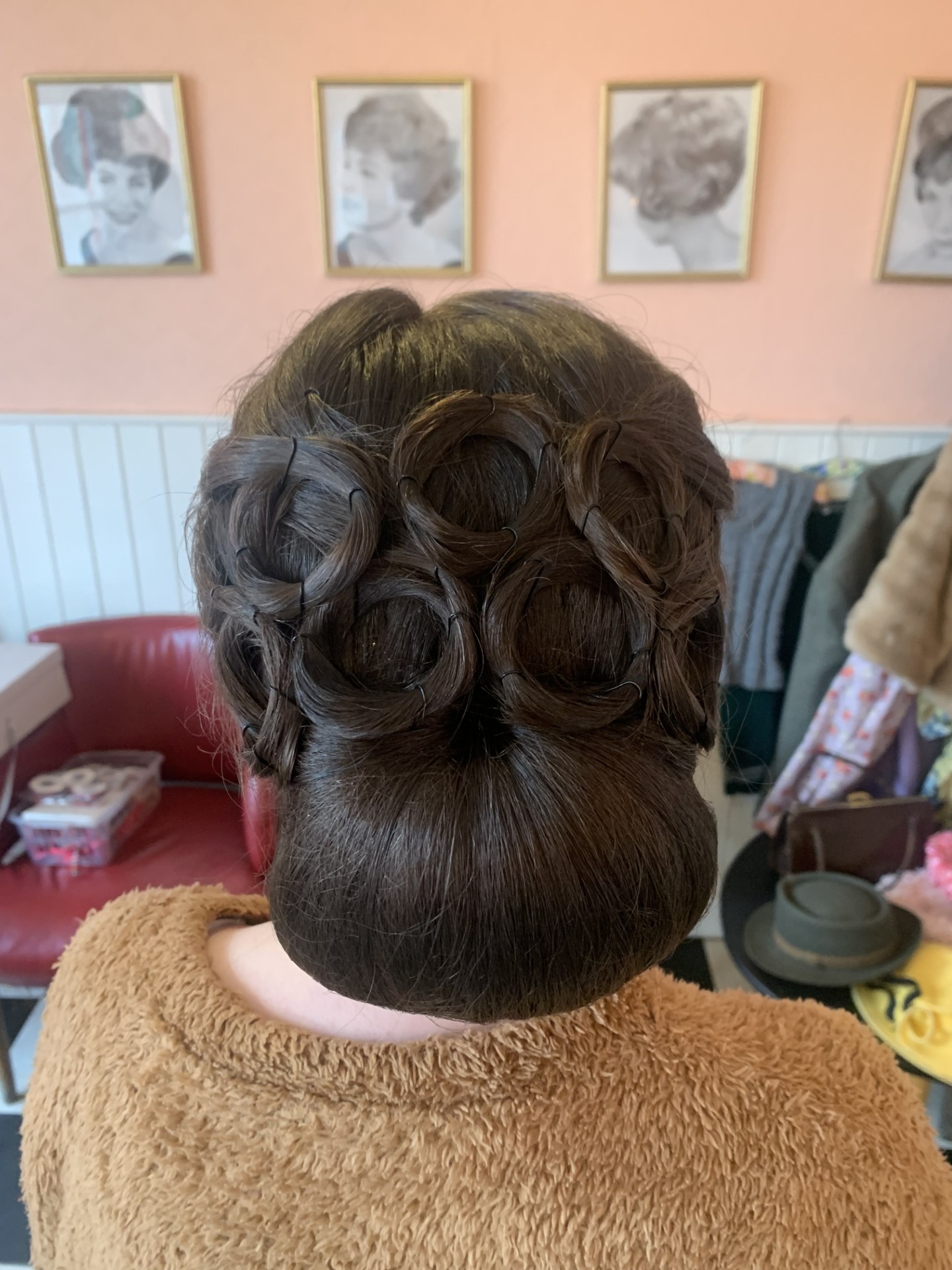
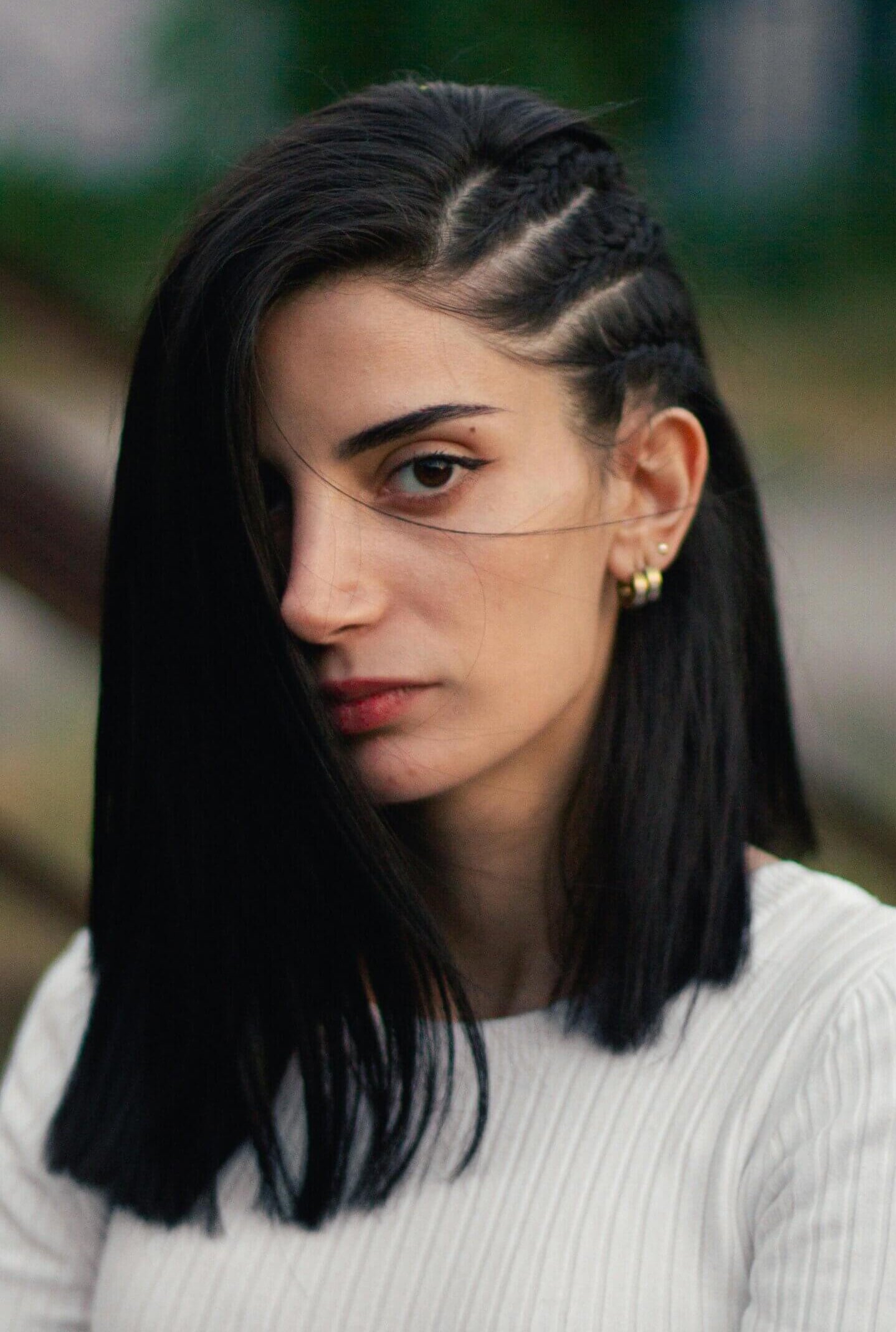
Another image of my 1950s hairdo at Beamish – a chignon bun with pin curls. Photograph taken by Elizabeth Earl, fellow Spark and Fashion North reporter.
I’d underestimated that in hair there are sometimes subtle revelations about society. And now, as we approach the end of the year, and over 100 years on from the distinctive flappers’ bob, which hairstyles will 2025 be known for? And what does this reveal?
“The blunt bob has been a certain favourite this year,” Gwenda Harmon, resident hair stylist and beauty expert at PowerYourCurls.com – who has over 10 years of experience – reveals to Fashion North. “It’s elegant, subdued and really confident.”
Gwenda is not alone in this observation. Rebecca Johnston (Rebecca Johnston Hair | Freelance Hair Stylist in Manchester), a freelance hairdresser who is based in Manchester City Centre and has over 13 years experience, also references the blunt bob as being highly sought-after in 2025, and likely to continue to be next year. “Another popular one has been the bixie which is in between a bob and a pixie haircut”, Rebecca says.
The bob’s popularity is no surprise. We’ve seen several celebs rocking it between 2024-2025: Zendaya, Lily Collins, Leslie Bibb and Ayo Edebiri, to name just a few.
Women in the 1950s were no strangers to the big chop, either. Teenagers often had long hair, which their mothers would eventually bring them in to have cut, Zoe reveals. A haircut, in many ways, can function almost as a rite of passage.
In the 1920s, the bob emerged after a time of intense change, which saw the end of the First World War in 1918 and increasing efforts by women to achieve gender equality.
Do trending hairstyles correlate to what is happening politically at the time? When I ask Rebecca, she believes they do: “There’s also obviously a lot of upheaval for people socially now as well, with that I see more people looking for bigger changes to their hair. It’s a really nice way to feel different and signify you’re moving forward, even when you are dealing with external worries like what your career looks like after AI or other concerns around the political climate.”
“I think that’s always been the case as well, people have always used their hair as a way to express themselves and identify themselves,” she says. In 2025, perhaps the bob is a reclamation of control in a world that feels increasingly unpredictable.
The appeal of bobs, according to Rebecca, is that “it’s a style that’s low maintenance but can be really striking”. And lower maintenance looks are something Rebecca finds people increasingly gravitating towards amidst worries about saving money, leading to longer periods between appointments. This has also translated into people opting for “a more striking haircut to express themselves” rather than colour, she reveals. In October 2025, 87% of adults reported the cost of living as an issue in the UK in the Opinions and Lifestyle Survey (OPN) conducted by the Office of National Statistics.
As Zoe talks me through the steps of my hairdo in Elizabeth’s, she tells me women in the 50s would try to maintain their styled hair for as long as possible. There was a lot of pride in hair during this era, where it was almost scandalous to leave the house without one’s hair styled, or without a hat.
For women in the Edwardian era (1901 to around 1914), Emma – costumed in Edwardian period clothing at the Ravensworth Terrace part of Beamish – tells me women would have had long hair, worn up. “Women wouldn’t wash their hair very much, maybe once a week, or they’d use something called shampoo powder to kinda take the grease out of your hair,” Emma tells me.
The drapery department of the Annfield Plain Industrial Co-operative Society, part of the 1900s town in Beamish, displays examples of Edwardian clothing, hats and hair accessories. Speaking to Dan, who engages visitors behind the counter of the drapery department with information about the era, I find out that in Edwardian hair there was still “very much a Victorian influence”.
Dan reveals that hats were a major feature of fashion in this era. Gentlemen could remove their hats indoors, while women could not. And social class played a factor. Factory women would use headscarves to protect their safety at work. Headscarves had a practical purpose, yes, but this didn’t stop women looking stylish. For example, Dan tells me women could try and find headscarves in their favourite colours.
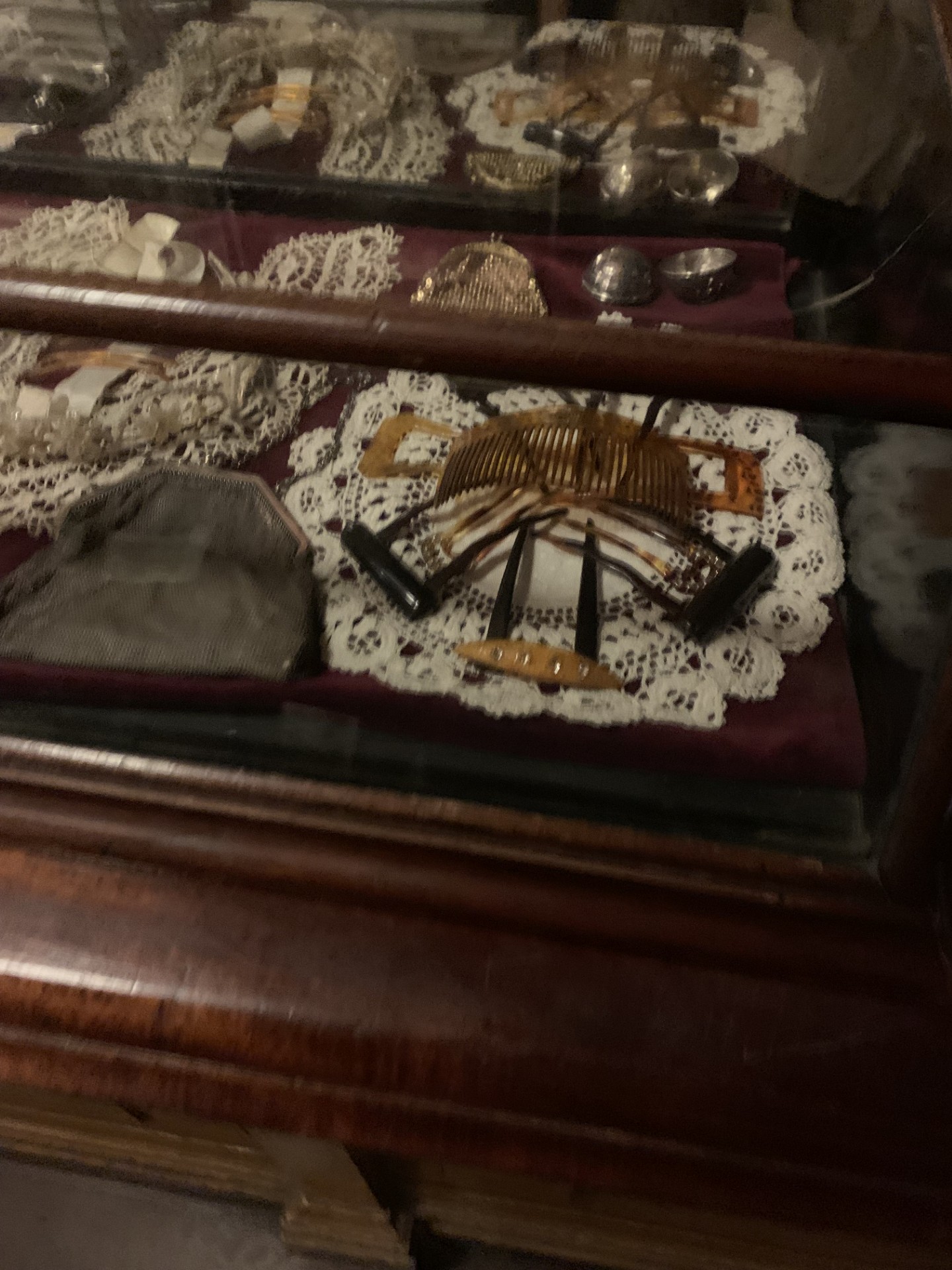
Hair Accessories at the Drapery Department of the Co-op store- Beamish. Photo credit: Hannah Rooney.
Dan also referenced the influence of the “Gibson Girl”, seen as a model of the ideal woman. Women following the “Gibson Girl” archetype would aim for big updos. How does this compare to the 21st century?
Well, in 2025, it appears women are not seeking to live up to an idealised image. As Gwenda notes, there’s been an increase in authenticity. “People seek individuality, something that mirrors their character rather than conforms with trends,” Gwenda says. In line with this, she predicts 2026 will feature “hybrid, bespoke cuts”, especially “layered, textured styles that combine contemporary edge with traditional forms”.
“It seems like people really want to be real. They want their hair to represent who they truly are,” Gwenda says. “It suggests that society appreciates being unique, having freedom, and showing quiet confidence.”
For Rebecca, alongside the bob, “fringes and longer layers” have been popular this year. “A lot of people have been embracing their natural curls, as well,” Rebecca says.
I myself have spent the majority of this year umming and erring between getting a fringe or cutting a bob. My hair at the moment is much like the Edwardians’ – long and rarely worn down. My trusty claw clip is my very best friend. Perhaps as we approach 2026, I should make myself more open to changes to my hair.
Brittany Younger, a Loctitian at Shades of Beauty in Westmont, Illinois, reveals to Fashion North the styles she’s found have been popular this year. Brittany says: “This year, the loc community saw a significant rise in Wicks, where smaller locs are combined to create thicker, fuller ones. It’s an edgier Southern-influenced look that really surged as people leaned into bolder, statement-making styles.” Brittany emphasises the importance of hydration when taking care of this style.
Furthermore, Brittany says: “We also saw a wave of trending protective styles within the loc category itself, including Loc Knots (for both men and women), Boho Locs layered over existing locs, and Barrel Braids. These styles reflect a broader cultural movement toward creativity and personalization.”
After Brittany posted a social media tutorial showing how to properly comb out mature locs, she found more people this year were combing out their locs. “Once people realized they didn’t have to cut off all their hair to start fresh, we saw comb-outs happening nationwide,” Brittany reveals to Fashion North.
What are Brittany’s predictions for next year? She says: “I anticipate a major wave of Micro Locs, especially among women who are embracing natural textures but want a sleeker, more uniform aesthetic. Micro Locs require consistent maintenance, and I’m already seeing people pair them with lightweight oils and braid accessories to personalize the look.”
It’s fascinating to think that one day the fashion of this era will be history. When historians look back to the 2020s, what will the trending hairstyles tell them?
Well, if Beamish continues to retell history with its immersive exhibits and costumed volunteers and engagers, I’m sure in some hundred years, when the 2020s are long gone, visitors will be able to ask all about it.
Will the bob, bixie, or pincurls define your 2026 look? Let us know in the comments or on socials @Fashion_North!