Dressed For Success: The Fight Against Hidden Barriers Facing Women Job Hunting
A new report has revealed that modern recruitment systems are unintentionally shutting women out and knocking their confidence, Kira Hunter speaks to a UK charity helping to overcome this.
A woman named Melissa* walks into Smart Work’s North East Office, a day early to her appointment. Going through a hard time, experiencing miscarriages and being ill from living in a flat with mould, she came to the organisation to help her prepare for a job she had applied for as a teacher for kids with learning difficulties. “She had no confidence at all” says Samara Laboriel, Communications Coordinator at the branch. Helping to style the outfit for the Melissa*, Laboriel began learning about her life. How she had numerous brothers and sisters, two of which had children with learning difficulties. She didn’t realise it at the time, but her life had prepared her greatly for the job. Laboriel encouraged the woman to say everything she had said to her in her interview, drawing on her years of experience.
*Melissa is a fake name given to keep anonymity.
A week following, the woman got in touch. She got the job and eventually moved out of her mouldy flat. “That’s definitely a story that stuck with me. What’s really good about Smart Works is we gather feedback from our clients… It’s very rewarding” Laboriel says.

Samara Laboriel. Photo Credit – Smart Works North East.
Smart Works is a UK charity launched in 2013 that helps empower and support unemployed women by providing them with 60 minutes dressing appointments, in which they are styled an interview appropriate outfit based on their preferences and interview preparation sessions to help boost their confidence.
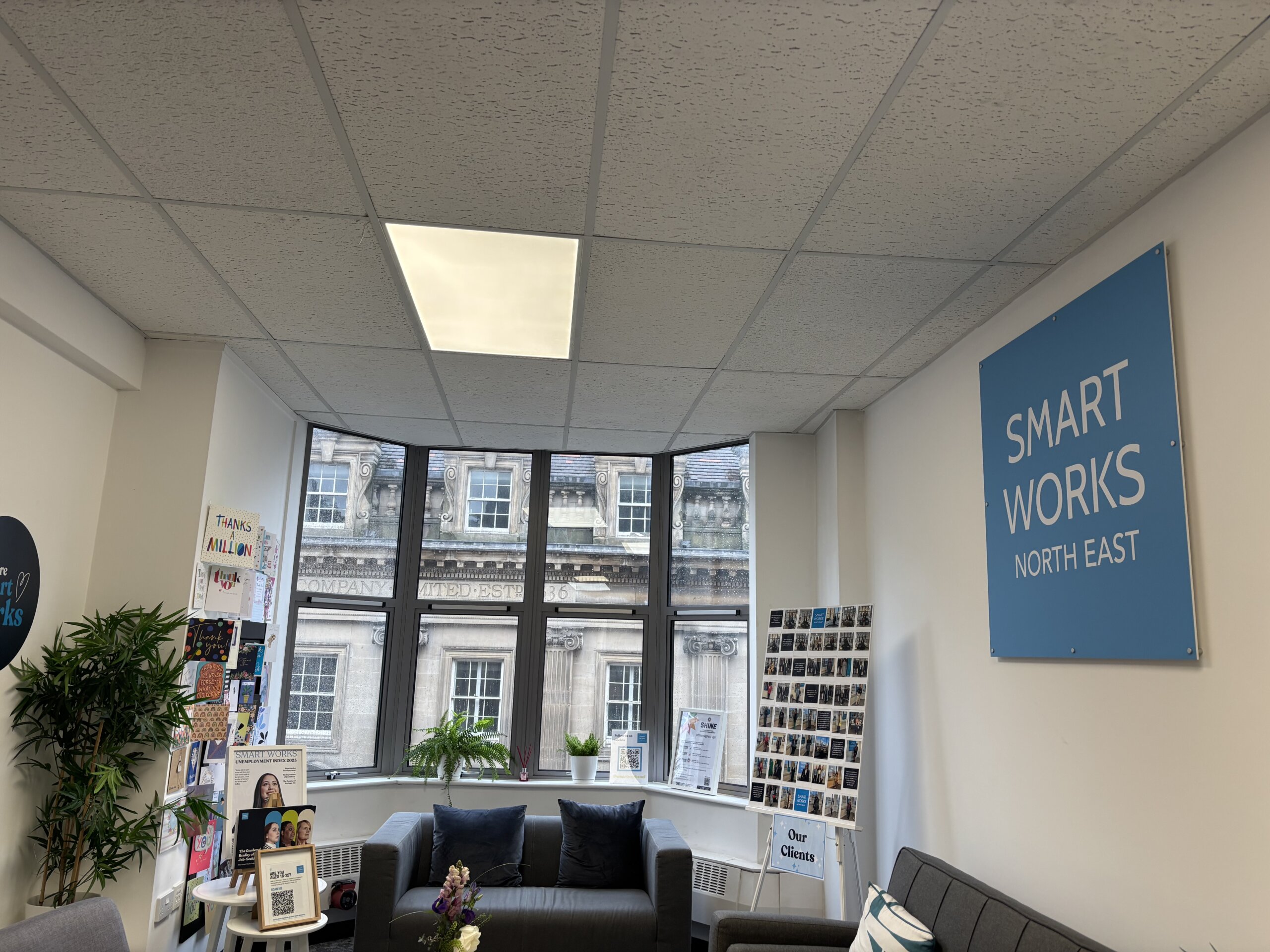
Inside Smart Works North East Office. Photo credit – myself.
They also produce reports data led reports called the ‘Smart Works Index’ which shares insight into unemployed women in the UK. The latest report, the ‘Smart Works Index 2025’ highlighted that modern recruitment systems, hiring practices and hidden barriers are unintentionally leaving women out of employment and affecting their confidence.
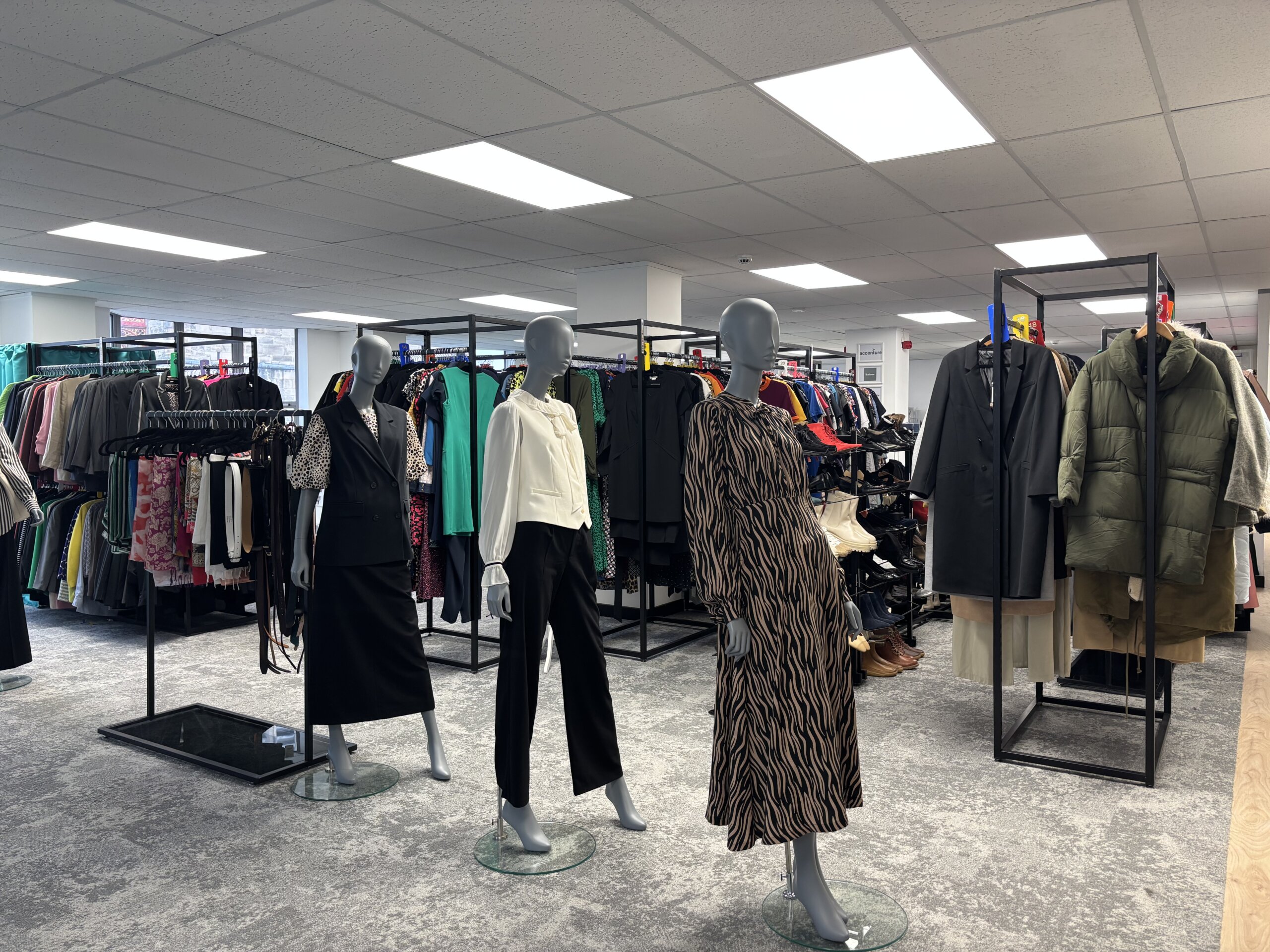
Smart Works North East Clothing racks. Photo credit – myself.
Speaking about these systems and practices, Laboriel explained AI integration into these strategies which sift through software systems that scan for keywords can be a big hindrance. Additionally, “a lot of the time its digital exclusion as well. So a lot of people maybe don’t have access to Wi-Fi or a device or a laptop, so they have to go to the library to be able to search for jobs”. All this adds up, with the Smart Works report stating “women are dedicating 23 hours a week to their job search, which is the hours of a part time job… It’s a job in itself”
Amanda Connolly, career and life coach specialising in supporting professional women agreed stating “Modern recruitment systems—particularly automated screening and online applications—can feel impersonal and opaque. This lack of feedback can be particularly discouraging and can amplify self-doubt.”

Amanda Connolly. Photo credit – Pause and Empower.
Speaking to Laboriel she explained that recruiters need to “more focused on designing recruitment processes that have women’s realities in mind. I think that’s why we live in a job market where it’s very overpopulated by men”. One of the barriers affecting women from reaching employment is flexibility, according to The Guardian in 2022 women provide 23.2 billion hours of unpaid childcare and require jobs that allow them to be flexible and fit in taking care of their children. As a solution, she recommended “more accessible job applications, I would like to see flexibility built into roles as well”.
View this post on Instagram
A common problem for mothers, Lesley-Anne Kirk – director at Northern Rights, a social enterprise helping disadvantaged people into sustainable employment, shared a barrier she has noticed recently is when “someone requires childcare, we feel it’s getting increasingly difficult for women that want to return back to work”. She explains people do not have the money to cover childcare whilst they are at work or going for interviews, additionally due to funding cuts “incentives to move back to work financially have reduced significantly, it’s not even affordable to sort of move from benefit into work, so they tend to be stuck in what you would call a benefits trap”.
View this post on Instagram
Discussing Smart Works success, Laboriel states she believes its due to their tailored service. “We listen to what people, we listen to people’s insecurities, we listen to what they’re worried about. And then we tailor the sessions to meet their needs”, emphasising that confidence is often low in their clients and that rebuilding it is key to helping them achieve employment she stated “because the job market is getting more competitive, it requires more confidence. So yeah, a lot of women, when they leave here, they feel more confident. In fact, 98% of our clients feel more confident in their ability to be successful in interviews afterwards. So, I think the numbers say it for itself really that the service really works”.
Connolly shared similar thoughts “the job search process can chip away at confidence in several ways. Repeated applications with little or no feedback can lead women to internalise rejection, even when it’snot personal”. Through her services, she tries to challenge the unhelpful thinking patterns “part of my role is helping clients separate their self-worth from the outcome of an application and build resilience so they can stay engaged with the process”.
If any women are feeling demoralised by the process and are struggling to gain employment Laboriel advises “Come to Smart Works. Yeah. Come to Smart Works cause we’re a free service. But also, you know, it’s hard. I would say, if you’re struggling to find a job, really look out there for the support because Newcastle is a small city, but there is support out there”.