Could New EU Regulations Change Fashion For the Better?
The EU’s ban on destroying unsold stock will come into effect on July 19, 2026, for larger businesses, with smaller businesses following in 2030, but how is this going to affect the UK?
Under the Ecodesign for Sustainable Products Regulation (ESPR), the destruction of unsold or returned clothing, accessories and footwear will be banned, helping cut waste and limit the environmental damage the destruction will cause.
To keep records of whether businesses are following the regulation, the EU is launching the Digital Product Passport (DPP). This keeps track of material composition, sustainability, and repairability of products, using the likes of QR codes.
Even though the UK left the European Union, we are still affected when the European Commission enforces rules, especially when revolving the likes of trade.
Olivia Jamison, an environmental lawyer, and specialist environment, sustainability and product practitioner, said:
“The ESPR does not apply to products placed on the market in Great Britain, but it is expected to affect behaviour in Great Britain where organisations are already preparing for ESPR. A UK circular economy action plan is anticipated shortly but in the meantime organisations which are considering ways to avoid destruction of goods are likely to have identified re-use or re-purposing, secondary markets, donations and stock modifications or rightsizing.
“In the EU and the UK presently, there is a requirement to follow the waste hierarchy so unsold consumer goods including fashion items should not be sent to landfill unless it is an option of last resort and certain materials are prohibited from landfill. Whether the new measures will stop overproduction is a different question and depends on the route to consumer market and market dynamics set against evolving laws.”
With the ESPR, the EU aims for a circular economy, by mandating products to be made to last longer and be easier to repair.
While the EU wants these regulations to add pressure on mainstream brands to reduce overproduction and the overconsumption of clothing, there are issues with brands finding loopholes as an alternative to managing overproducing.
Caryn Franklin, Fashion and Identity Commentator, said:
“It’s not necessarily going to solve the problem in its entirety because brands could still move unsold stock to outlet channels, and export abroad to be sold in markets.”
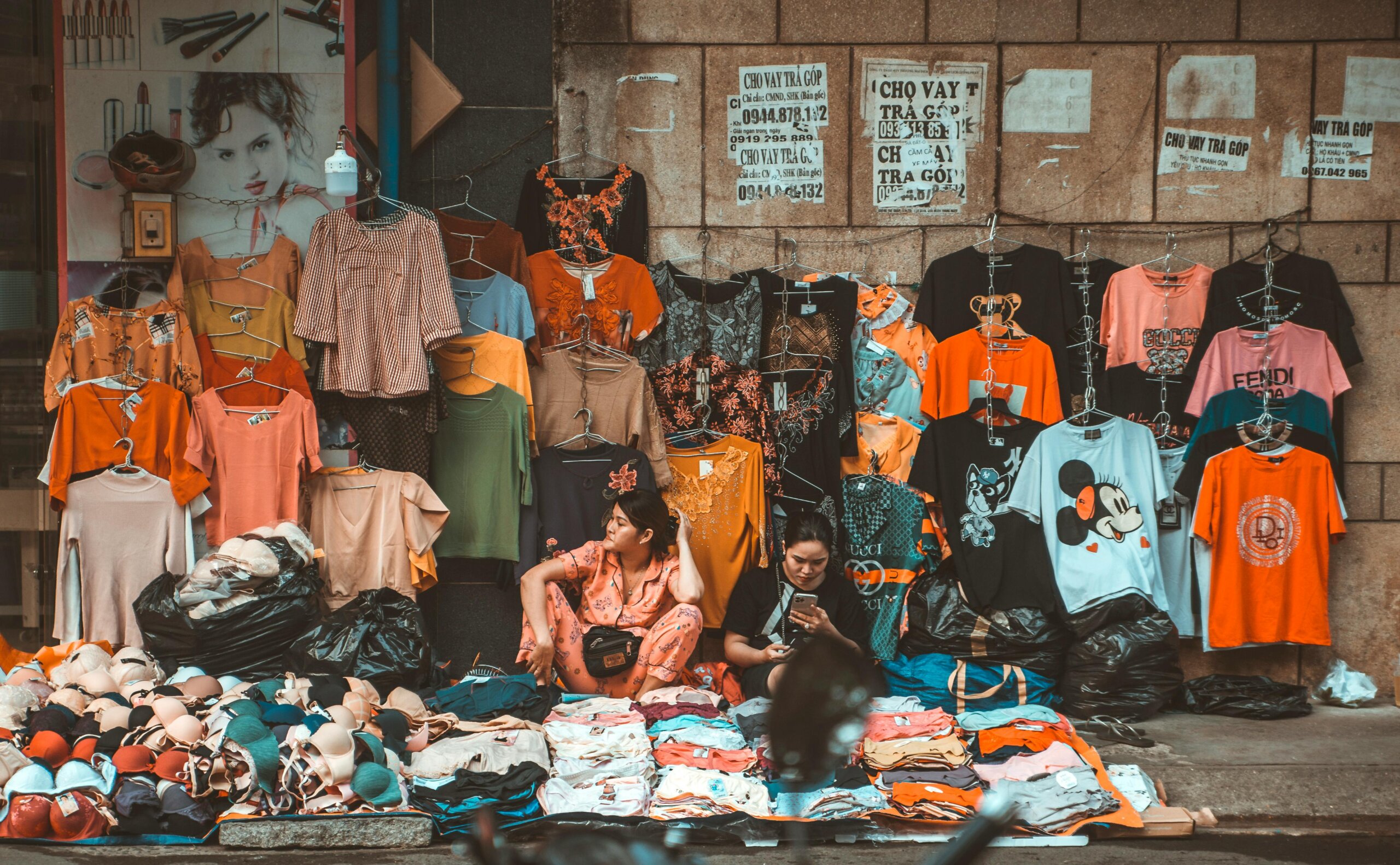
(Photo credits: Vinh Che via Pexels)
To combat overproduction, businesses will be forced to have a structural rethink and actually take accountability. They can produce as much as they do and sell them at a lower price, but it is at the expense of the garment workers and the quality of the garment.
“It’s just a numbers game for them; and capitalism drives an unsustainable business model.
Business culture has been managed within a very masculine environment, prioritising competition, thinking in linear ways, and big rewards for leaders at the expense of workers.”
The fault doesn’t just lie with the business owners themselves, but also with the consumer. To tackle over-demand and therefore overproduction both owners and customers must take accountability.
There are many of the younger generations that have been conditioned to expect clothing to be made quicker and to be new and different, as opposed to many of the older generations, who maybe put more thought into what items they are buying and why.
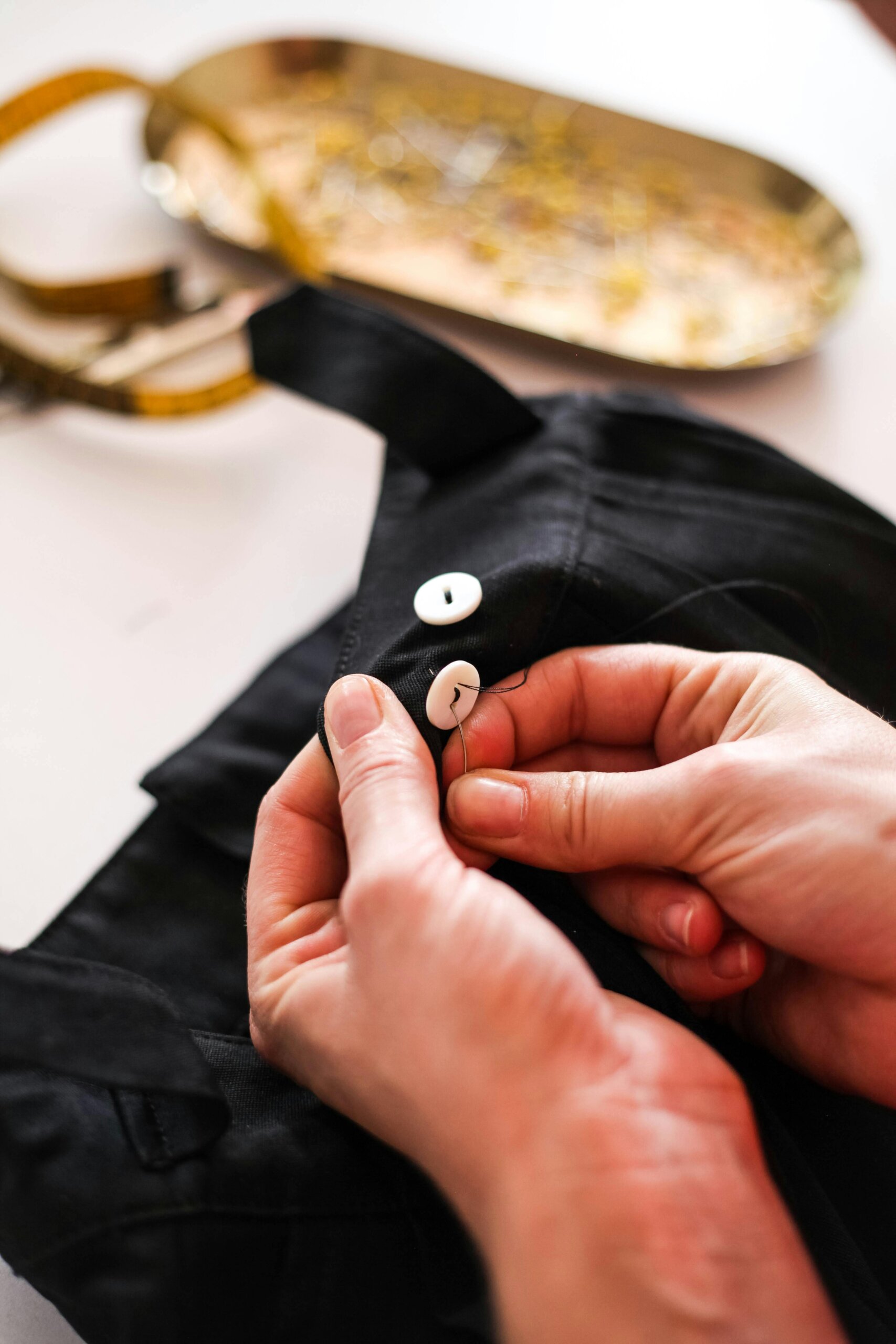
(Photo credits: Los Muertos Crew via Pexels)
Being able to sew and repair one’s clothing seems to be a lost skill, that declined at the rise of fast fashion and this mentality of ‘disposable’ clothing, that they then will either bin or donate to charity shops. While donating to charity shops is generally seen as positive, in the recent years many are seeing a massive surge in the amount of donations they receive daily, a lot of which end up in landfill as they cannot be resold, due to condition and quality of the item.
There are many alternatives that businesses could use instead of destroying their stock, some of which wouldn’t be detrimental to their profits, and might boost the idea of quality and not quantity.
Businesses starting rental and subscription services, where people could hire an item, paying a portion of the price, to wear for a single occasion like a wedding, or pay to have the item for a certain period before then returning it and someone else hiring it. This service would benefit both owner and consumer as the business is still getting profit and the renter is able to have better quality clothing for a smaller price.
Providing repair services, with maybe ‘get your first repair free’, might defer people from buying more when something is repairable.
Carlotta Gherzi, a fashion business consultant said:
“Why not partner with fashion universities, globally, and donate excess stock?
This would evolve into a fully circular business model.
Not all students have the disposable income to get fabrics and create garments. Brands (big mainstream brands like Zara) can collaborate with students to re-design overstock, and they can re-launch those pieces as limited collections, giving credit to the student designers and sharing the profits between brand and designer.”